The editor-in-chief has a new stick

Here’s a little bit of news which may have escaped notice by some in the information theory community:

“In view of its concerns about excessive reviewing delays in the IT Transactions, the BoG authorizes the EiC in his sole judgment to delay publication of papers by authors who are derelict in their reviewing duties.”

Reviewers may be considered to be derelict if they habitually decline or fail to respond to review requests, or accept but then drop out; or if they habitually submit perfunctory and/or excessively delayed reviews.

I’ve said it before, but I think that transparency is the thing which will make reviews more timely — what is the distribution of review times? What is the relationship between paper length and review length? Plots like these may shock people and also give a perspective on their own behavior. I bet some people who are “part of the problem” don’t even realize that they are part of the problem.

The card-cyclic to random shuffle

I heard about this cool-sounding seminar at the Berkeley Statistics department:

Mixing time of the card-cyclic to random shuffle
Ben Morris

We analyze the following method for shuffling n cards. First, remove card 1 (i.e., the card with label 1) and then re-insert it randomly into the deck. Then repeat with cards 2, 3,…, n. Call this a round. R. Pinsky showed, somewhat surprisingly, that the mixing time is greater than one round. We show that in fact the mixing time is on the order of \log n rounds.

The talk is based on a paper with Weiyang Ning (a student at UW) and Yuval Peres. The description the results is somewhat different because it’s \log n rounds of n moves, or n \log n moves. From the intro to the paper:

To prove the lower bound we introduce the concept of a barrier between two parts of the deck that moves along with the cards as the shuffling is performed. Then we show that the trajectory of this barrier can be well-approximated by a deterministic function f… we relate the mixing rate of the chain to the rate at which f converges to a constant.

The key is to use path coupling, a technique pioneered by Bubley and Dyer. It’s a cute result and would be a fun paper to read for a class project or something, I bet.

Five career-oriented things I wish I had done more of in grad school

As I’ve started my nascent academic career, I’ve faced a number of new and difficult challenges, and on more than one occasion I’ve felt hoisted with my own petard. Looking back on my graduate school experience, I realized there were a number of things which I could have done more that would have made things easier now.

  1. Write more grants. I came in to grad school with a NDSEG fellowship and then my advisor was well-funded. I had a blesséd life (especially compared to those in other departments). I should have gotten a bit more on the ball helping to write grants, even if it was just for the experience. Reading a proposal (or many) really gives a sense of what the document is about. More importantly, it’s a grant in your field and that’s something that you can’t really get out of one of those panels on grantsmanship that are pitched to a broad audience. Learning the process early has two benefits : it demystifies the strategy space in terms of writing, and it gives a good sense of what kind of things make sense and are “fundable.” I wrote little dribs and drabs of proposals here and there but it wasn’t until my postdoc that I really got to see and work on a full proposal.
  2. Do an internship. : It’s sad to say, but I never did an internship while in grad school. This was a real mistake. As an engineer it’s important to learn what is going on in “real” engineering but more importantly, as a engineering theorist it’s important to understand what’s going to be important in the future. Some of that you can do by watching the news and trends, but having a visceral sense of the challenges in making a real object is an important perspective. On the more practical side, it gives you more contacts in industry and the more people you know, the more ideas you can integrate.
  3. Constantly tell stories. : Part of this is for grant writing, but it’s a more general skill that is important for the job market and interacting with your colleagues, 99% of whom will be outside your area. This is a skill that is hard to develop in graduate school because we spend our time in our labs talking to other graduate students who are not that far away from us in terms of intellectual background. This kind of story-telling is often cast as “be able to talk to the general public” or “explain your research to a crowd that includes information theorists and device physicists.” Part of being able to tell a story about your research is being able to tell it in someone else’s language, which means understanding a bit about how people in other fields think. How would you explain your research to an anthropologist? I did practice explaining to other people, but I wish I had practiced more.
  4. Find a community. : I do a lot of work that falls between fields or on the corners of fields, so I’ve bounced around a bit. The last time I applied for jobs I had interviews wearing a networks hat, a signal processing hat, and an information theorist hat. Finding a community can have a positive or negative connotation. On the one hand, it’s dumb that people care so much about labels : “oh, he’s a machine learning guy,” or “oh, he’s a signal processing guy.” On the other hand, cultivating professional relationships with a research community is valuable because those are the people who will remember you when your name comes up.
  5. Write the journal version first. People always say this. I think Lalitha told me this in 2005 at my first conference. Of course it’s a good idea. And it’s a slippery slope if you let it slide for one paper… 5 years later you realize you have 4 nascent journal papers with nice full stories but not enough time to do the last bit of research or flesh out the results a bit more. Not every conference paper is (or should be) a journal-worthy idea. But the goal is to tell bigger stories than 4 page ICASSP paper, and it’s important to keep that bigger picture in mind. I wish I had done more work contextualizing some of the things I worked on so I could come back to them and expand on them later. Instead I have a lot of weird half-baked ideas in old PDFs sitting around on my hard drive.

On conference schwag

When I moved to Chicago I realized I had a ton of conference bags. I was lucky enough to have a large closet in San Diego, and they kind of piled up in a back corner, from various ISITs and so on. I gave a few to Goodwill, but I have no idea if they will get used. I was recently talking to folks who work in public health and they were shocked that we get these “nice” bags at conferences — they get water bottles. Computer science conferences give out shirts. Why do we get bags? It’s kind of a pet peeve of mine, for a number of reasons.

How much do these bags cost? I should find this out, but I imagine a full messenger bag with laptop sleeve (c.f. ISIT 2012) isn’t cheap, and that cost gets directly transferred to registration fees. It probably only works out to 20 bucks but still…

Why don’t we get pens and paper? Most of the time you get a bag, a USB stick with the proceedings, the program booklet… and that’s it. I was shocked at SPCOM in Bangalore that they gave us a spiral notebook (handy!) and a pen (and really nice one at that) on *top* of the bag (which is pretty nice, as backpacks go).

Don’t people already have bags? You’re traveling halfway around the world with your laptop. You must have some sort of bag that you use already — why do you need another one? How are you going to fit it into your luggage?

Of course, after thinking of these complaints it turns out my ISIT 2012 bag has been a lifesaver — my apartment was robbed and they took all of my computers and electronics and carried them off in my bag, so having a ready replacement sure was handy. Furthermore, I use the tote bags (ISIT 2007-2009) all the time for groceries or going to the gym or the beach, so those are great.

What kind of schwag would you prefer? I use my IPSN 2005 mug all the time at work for tea…

Readings

Did I mention I love the Chicago Public Library? It can be frustrating at times, but the main branch is right on my way to and from work.

The Magician King (Lev Grossman) — The sequel to The Magicians, sometimes described as Hipsters in Narnia. This book is actually darker, if such a thing as possible. I think it’s interesting to look at it plotted in terms of the lives of likely readers. The first book is for college kids. The second is for post-college working kids who have nice jobs and realize that their lives feel a bit empty.

Odd and The Frost Giants (Neil Gaiman) — I’ve been on a children’s book kick. A lovely little tale set in Viking mythos.

The Alchemyst, The Magician, The Sorceress (Michael Scott) — Children’s/YA fantasy series. I had mixed feelings about it but it featured John Dee as a villain, and having read so much of Crowley’s Aegypt Cycle, I was interested in Dee as a character. Very different here — he’s a supervillain.

The Poisoner’s Handbook (Deborah Blum) — A fascinating tale about the rise of the medical examiner’s office and forensic medicine. The descriptions of how to detect various poisons in the tissues of the deceased is not for the squeamish!

The Immortal Life of Henrietta Lacks (Rebecca Skloot) — This book tells the story of the cell line HeLa, taken from Henrietta Lacks, an African-American patient in the 50s who died of cancer. Her cells were able to multiply on their own in the lab and ushered in a new era of research, but the way she and her family were treated epitomizes the ethical void at the heart of many scientists’ view of human subjects research. Despite this being an important story to tell, Skloot manages to make a lot of the story about herself — there’s a rather vigorous critique here.

1Q84 (Haruki Murakami) — Pretty classic Murakami, but a little more focused in content if expansive in scope. Investigates in fictional form some of the cult phenomena that seem to have captured his imagination lately. Critical opinion has been pretty divided, but I’d recommend it if you like Murakami, but not as an intro to his oeuvre.

The Atrocity Archive (Charles Stross) — sysadmins battle Cthulhu-eqsue horrors from the beyond. This is the first book in the Laundry series, and while the narrator is entertaining, I’ll probably give the rest of the series a pass.

Halting State (Charles Stross) — a near-future in which massive fraud/theft in an online game threatens to undermine the real economy. Takes gold farming and selling of WoW stuff on eBay to its extreme and then looks at what happens. Stross is good at extrapolating economic scenarios, and this was certainly more fun to read.

Postdoc at Cornell in smart grid, learning, optimization and control

Applicants are sought for postdoctoral scholar position(s) at Cornell University in the areas of smart grid, learning, optimization, and control. Topics include, but are not limited to,

  1. the economics and operation of power systems with significant penetration of intermittent renewables.
  2. stochastic optimization, learning, game theory, mechanism design, and their applications.
  3. inference and control involving heavy tail distributions.

Successful candidates will participate in research activities led by Professors Lang Tong and/or Eilyan Bitar.

To apply, please send your CV, two recent papers, and 2-3 names references to Lang Tong (ltong@ece.cornell.edu) and Eilyan Bitar (eyb5@cornell.edu).

Postdoc job openings

Some people have told me about postdoctoral position openings that are opening up, and I figured I’d repost some of them here as they come along. Of course, there are other places to post announcements, but I find that postdoc opportunities are a bit harder to advertise/hear about. I think a lot of systems EE people applying for academic positions right out of grad school tend to put off applying for postdocs until they hear back about their faculty interviews — I’d tend to say this is a mistake:

  • If your graduation date may be a little flexible, pinging someone early on (e.g. in the fall) about possible postdoc opportunities can be a good plan. NSF grant deadlines are in the fall, and so they could write a postdoc position into a current proposal.
  • Of course you’re going to apply for faculty positions, and the people you’re talking to about postdoc positions know that. However, if you get to May and haven’t talked to anyone about postdoc options, you may find that those positions have filled up.
  • Don’t think of a postdoc as a “fallback plan” (akin to a “safety school”) — it’s an opportunity and a chance to make a strategic decision. Do you want to switch areas or learn about something new? Do you want to dig deeper into things you’ve already been working on? Do you want a springboard to get a job in a specific country? Do you want to build closer ties to industry? Do you want closer mentorship?

I went to a panel at Allerton once on “whether you should do a postdoc” starring (among other people) Aaron Wagner and Todd Coleman, I believe. Everyone was very enthusiastic about doing a postdoc. Everyone on the panel had faculty positions lined up for after their postdoc and deferred their start date to do that postdoc. This is the best of all possible worlds but is pretty unusual, so don’t count on it.

This is all dodging the issue of whether or not you should even do a postdoc. That might be a topic for a different post (or a debate for the comments) — I know people have strong feelings on both sides. I tend to think our system is broken or veering into brokenness.

However, more information is more power, so if you have a postdoc announcement (details are helpful) and want me to post it here, please do send it my way. You can also try to post to the IT Society website.

Meanwhile in Greece: Tax inspectors besieged in Hydra.

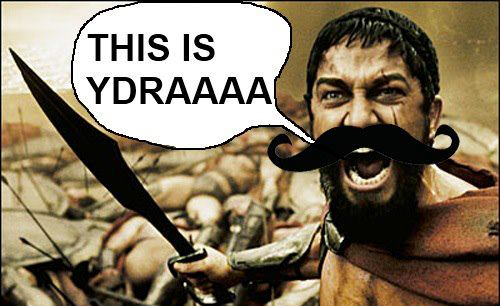
This Friday, tax inspectors arrived in the island of Hydra located in the Aegean sea near Athens. Hydra (also spelled Ydra) is a high-end tourist destination with a strong yachting and maritime tradition. 

As in.gr reported, one restaurant owner was caught for tax evasion and fainted. Tax inspectors arrested her son and led him to the local police station.

Subsequently, protesting locals besieged the police station where he was kept. The tax inspectors were forced to remain in the station until the morning, when special police units arrived from Athens to set them free.


Image

A Ranking of World University Rankings

Shanghai Jiao Tong University recently published its Academic Ranking of World Universities (ARWU) for 2012. As usual, it contains both general university rankings and many specialized field and location based lists.
Ranking universities is an impressive dimensionality reduction challenge:
map from academic institutions to one dimension, hoping that your projection relates to loosely defined concepts like academic reputation. Think of trying to land a fighter jet on an aircraft carrier while reading Tractatus Logico-Philosophicus to understand the concept of landing.

Rankings of specific departments are much less meaningless compared to university rankings and serve different purposes. As a student, I must admit that rankings seemed very useful. They allegedly help in another aircraft carrier landing task of choosing a school.

Just like everybody else, I still look rankings but now I have several concerns. Graduate school rankings in particular create a self-fulfilling prophecy: the best students and young faculty join higher ranked schools when given the option, hence creating a positive feedback loop.

US News almost has a de-facto national ranking monopoly, especially in the eyes of students. This sounds like a dangerous thing. Universities and departments have strong incentives to optimize a specific formula involving indicators like PhDs awarded per year and papers per academic staff. Aligning with a specific ranking methodology might not necessarily align with society’s or student interests.

Instead of thinking about these important questions, I compiled my personal ranking of world university rankings. The methodology is highly scientific: I read through each list and counted how many times I screamed: ‘Seriously, you ranked this school higher than this other school?‘.

The ranking with the lowest number of screams wins. Interestingly, ARWU wins my least absurd ranking award. The rest are:

1. ARWU

2. Times Higher Education World University Rankings

3. QS World University Rankings (aka US News world)
(Imperial at #6 and Stanford at #11 /facepalm)

(RatER, Forbes remain unranked)